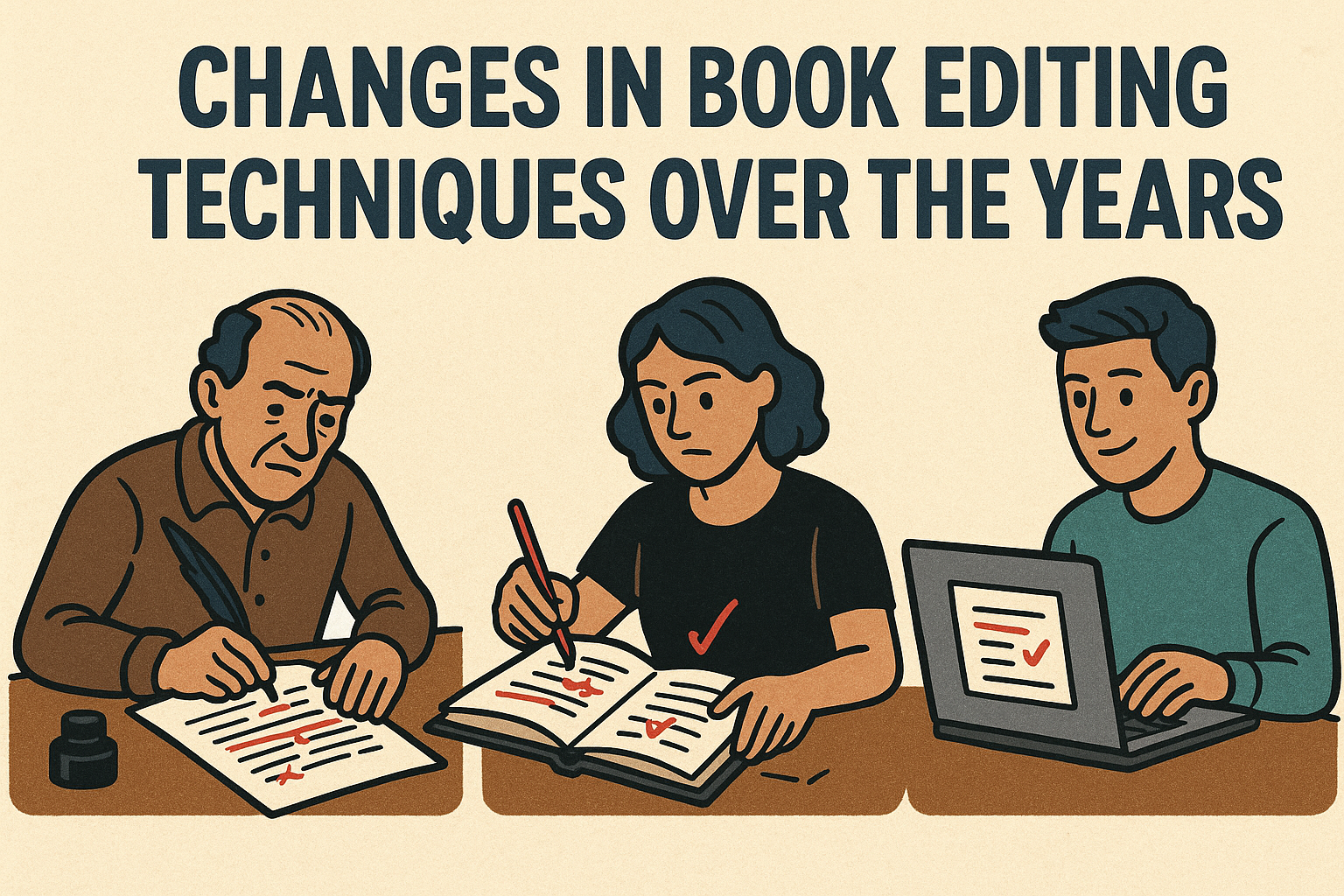
Changes In Book Editing Techniques Over The Years
Book editing has evolved. Techniques that once worked well may not fit today. New methods appear regularly. This article explores those changes.
The Early Days of Editing
Editing began with manual processes. Writers submitted drafts on paper. Editors marked changes using pens. They focused on grammar, spelling, and punctuation. The goal was clarity.
However, editing was time-consuming. It required physical labor. Furthermore, mistakes often slipped through the cracks. As a result, some books fell short.
The Rise of Typewriters
Then came typewriters. These machines sped up the process. Clearly, editors could type corrections directly on pages. Additionally, typewriters made drafts cleaner. Thus, the overall editing experience improved.
Despite advances, the process remained similar. Editors still relied on eye and hand. They needed attention to detail. Nevertheless, mistakes persisted, often in the final copies.
The Digital Revolution
The digital age arrived. Computers changed everything. Editors now used software for corrections. As a result, editing became faster and more efficient.
Word processors allowed easy tracking of changes. Editors could highlight errors, add comments, and suggest edits. This feature transformed the workflow. Writers received clear feedback. In addition, work could be saved and shared easily. Outside of that, online collaboration flourished.
The Introduction of Style Guides
Next came style guides. These guides set standards. For instance, The Chicago Manual of Style became popular. Editors followed these rules. They ensured consistency across manuscripts.
With style guides, many issues were resolved. Clarity improved. Spirit of collaboration increased. Furthermore, additional references appeared, helping editors refine their skills.
Self-Publishing and its Impact
Self-publishing emerged. More authors took control of their work. This trend shifted editing focus. Often, self-published books lacked professional edits. As a result, the industry faced challenges.
Many new authors did not realize the importance of editing. Consequently, many books entered the market with errors. Therefore, the demand for professional editors grew.
In response, editing services expanded. Authors sought help. They wanted polished work. Hence, a new market opened for freelance editors.
The Role of Technology
Technology further changed editing. Tools like Grammarly and ProWritingAid appeared. These applications provided instant feedback. Thus, authors gained real-time assistance.
However, reliance on software had drawbacks. Tools may miss context. They often fail to recognize tone. Consequently, human editors remained indispensable.
The Emergence of Content Editing
Content editing gained traction. Focus shifted from grammar to structure. Editors assessed flow and coherence. This process involved more than corrections.
Editors began collaborating with authors. They helped shape narratives. Moreover, they focused on story arcs and character development. Ultimately, this approach aimed for deeper engagement.
The Importance of Diverse Perspectives
As the industry evolved, diversity became vital. Editors began to seek varied viewpoints. This trend enabled stories to resonate with wider audiences.
Encouraging diverse voices enriched narratives. Editors participated actively. They listened to authors and suggested changes. Ultimately, this practice improved storytelling.
Online Communities and Resources
Online platforms emerged. Writers connected with editors globally. This access expanded opportunities. Notably, communities formed around shared interests.
Writers sought guidance. They shared experiences and lessons learned. In addition, resources for professional development grew. Consequently, editing knowledge spread. To learn more, consider visiting EditMojo.
Current Trends in Book Editing
Today, editing is collaborative. Editors and writers work closely. They share goals and visions. The outcome often reflects shared creativity.
Moreover, technology keeps advancing. Flexibility and adaptability are essential. Editors must stay updated. They need to assess tools continuously. For instance, utilizing these editing techniques can enhance workflows.
Conclusion
Book editing has undergone significant change. From manual methods to digital tools, the evolution is clear. Each stage brought new opportunities and challenges.
As the industry develops, so do techniques. Editors must embrace change. They need to adapt. Ultimately, both writers and editors benefit from this journey.
For further insights on editing, explore more at EditMojo’s blog.