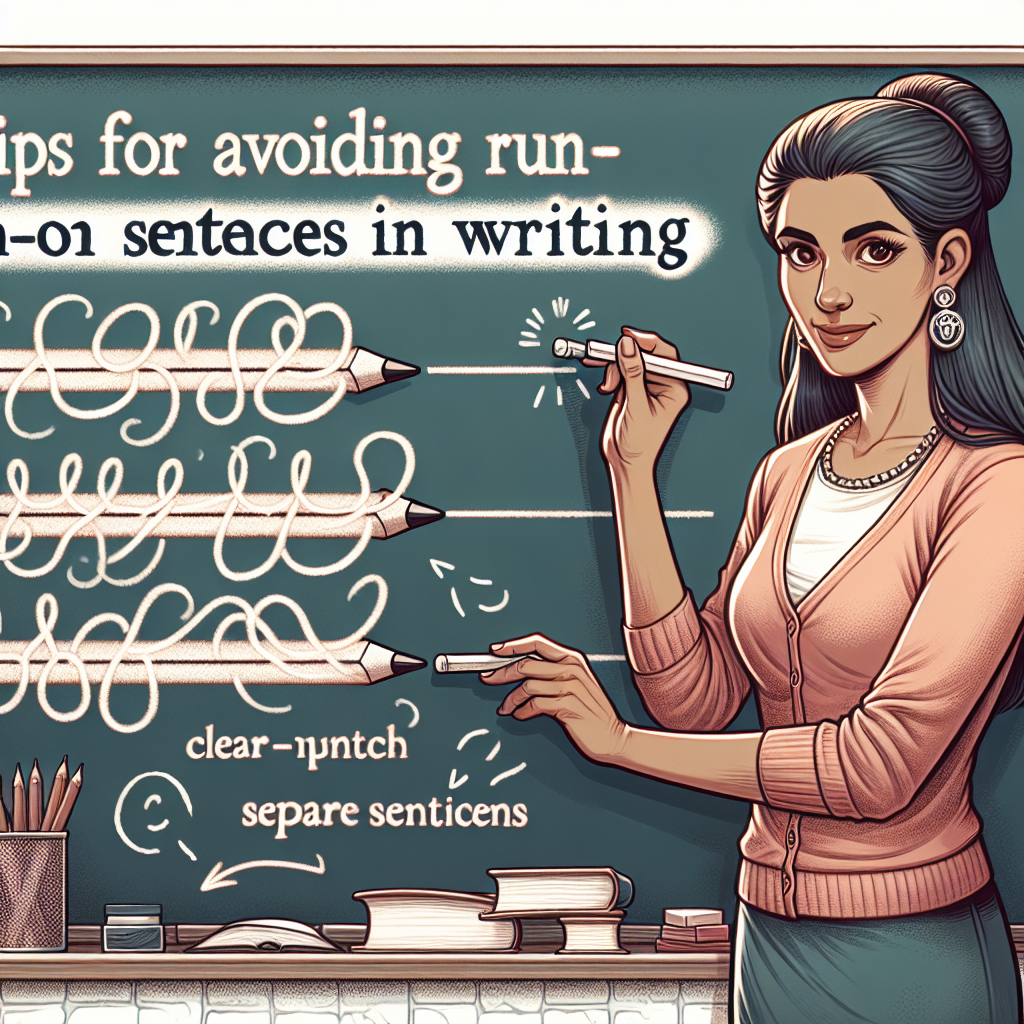
Tips for Avoiding Run-On Sentences in Writing
Run-on sentences can confuse readers. They combine multiple ideas without clear separation. Thus, clarity suffers. Here are some tips to avoid this issue.
Understanding Run-On Sentences
First, know what a run-on sentence is. It occurs when two independent clauses connect without punctuation. For instance, “I like cats I like dogs.” This creates confusion. Keep this in mind as you write.
Use of Punctuation
Punctuation plays a key role. Use periods to end thoughts. It helps to express ideas clearly. For example, write “I like cats. I like dogs.” This clearly shows two ideas.
Additionally, semi-colons connect closely related thoughts. For instance, “I like cats; they are interesting.” This makes the sentence flow while keeping it concise.
Commas and Conjunctions
Commas can also help. However, use them wisely. Combine independent clauses with conjunctions. Words like “and,” “but,” and “or” work well. For example, “I like tea, but I also enjoy coffee.” This keeps the sentence smooth and clear.
For more examples, check out our detailed post on run-on sentences.
Breaking Up Sentences
Long sentences often lead to run-ons. Break them into smaller parts. Each sentence should convey a single idea. For example, instead of “I enjoy hiking I love nature too,” write “I enjoy hiking. I love nature.” This approach enhances clarity.
Read Aloud
Reading your text aloud helps. It reveals flow issues. If you stumble, consider revising. This practice often highlights run-ons. Adjust as needed.
Utilize Sentence Variety
Vary sentences in length and structure. This prevents monotony. However, ensure each sentence stands alone. A mix keeps readers engaged while reducing run-on chances.
For more tips on sentence structure, visit our article on sentence structure.
Identify Common Mistakes
Be aware of your common pitfalls. Many writers struggle with certain areas. Identify these and focus on improvement. For example, if you often create long sentences, practice breaking them up.
Use Tools and Resources
Online tools offer helpful feedback. Use grammar checkers to spot run-ons. These can often pinpoint issues you might miss. Consider trying tools like Grammarly for added support.
Explore more resources on our site. We have various guides that can help, including our post on grammar checks.
Practice Makes Perfect
Consistent practice enhances writing skills. Set aside time each day for writing. Focus on clear sentence construction. Over time, you’ll notice improvement.
Peer Review
Getting feedback helps immensely. Share your writing with peers. Ask them to point out any run-ons. Fresh eyes can catch what you miss.
Conclusion
Avoiding run-on sentences improves clarity. Employ punctuation effectively. Break up long thoughts. Utilize variety and seek feedback. With practice, you’ll write with more precision and impact.
For more tips, explore our blog for resources that elevate your writing. Check our article on writing tips for further insights.
#Tips #avoiding #runon #sentences #writing