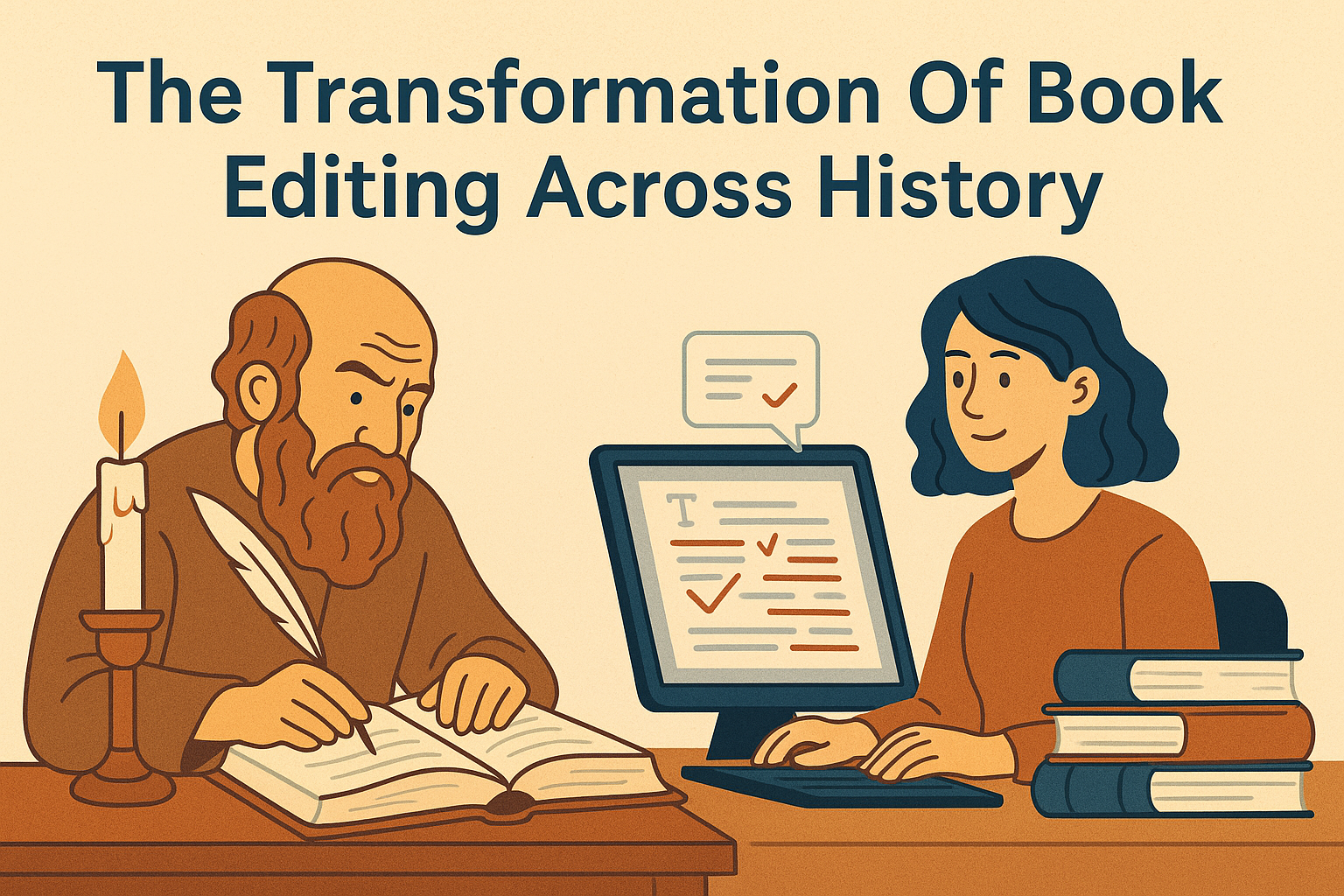
The Transformation Of Book Editing Across History
Introduction
Book editing has changed greatly. It evolved over time. Each era brought new tools and practices. This article explores those changes in book editing.
Ancient Times
In ancient times, editing was a manual task. Scribes copied texts by hand. They checked for errors. Mistakes were common. They used papyrus and clay tablets. Each copy varied slightly. Still, the essence of the text remained.
Many cultures prized storytelling. They passed down tales orally first. Eventually, they put stories into written form. This shift marked the start of editing. Scribes worked diligently. They aimed for accuracy, but resources were limited.
The Middle Ages
During the Middle Ages, monasteries took over editing. Monks became the primary scribes. They copied manuscripts. The focus shifted to religious texts. Editors paid attention to detail. They used tools like quills and ink. They still faced challenges.
Errors could occur when copying. Monks sometimes added personal notes. This action led to changes in meaning. Thus, editing became more complex. While preserving the original message remained important, individual interpretations began to emerge.
The Renaissance
The Renaissance brought a change. The invention of the printing press changed everything. Suddenly, books were more accessible. With this advancement, editing became a team effort. Editors and typesetters worked together.
Publishers emerged. They sought quality. They employed editors for oversight. This period marked the start of professional editing. Instead of just copying texts, the goal shifted. Editors aimed for clarity and style adjustment.
The 18th and 19th Centuries
In the 18th and 19th centuries, editing became more structured. Typesetting improved as well. With more books in circulation, the need for clearer guidelines arose. Some editors created style guides.
These guides ensured consistency. The role of the editor became crucial. Authors had unique voices. Editors navigated these voices while keeping the overall tone. Many authors embraced the support of editors. They understood its benefits.
The 20th Century
The 20th century introduced more changes. Technology entered the editing field. Typewriters changed the game. Editors typed direct feedback onto manuscripts. This shift made communication faster.
Moreover, the rise of literary agents emerged. They often worked with editors. Agents sought the best fit for authors. They understood the market. This period saw collaboration increase. Editors, agents, and authors worked closely.
Furthermore, magazines and journals flourished. Writers sought publication. Editors faced an overwhelming number of submissions. They learned to evaluate quickly. This need fostered a more rigorous editing style.
Digital Era
With the arrival of the digital era, editing transformed again. Word processors became standard. Editors could track changes easily. This process allowed for direct communication. Editing became more collaborative.
Online platforms emerged. They provided self-publishing options. Many new authors and editors entered the field. This shift disrupted traditional publishing. Editors now faced a broader range of styles. They learned to adapt rather quickly.
Furthermore, resources became abundant. Writers could access tools online. Companies like EditMojo emerged. They offered various editing services. This accessibility changed how authors approached editing.
Current Trends
Today, editing involves more than corrections. Professionalism prevails. Editors possess specialized skills. They work across genres. Many still follow traditional methods while embracing new tools.
Editors engage with authors. They focus on developing stories. They analyze structure and content. This focus requires an understanding of narrative flow. It is crucial for the final product.
Moreover, developmental editing has gained traction. This method involves working closely with authors. Editors provide feedback on plot and character development. This approach strengthens the manuscript. Authors appreciate the insight.
The Enhanced Role of Technology
Technology plays a significant role now. Almost every editor uses software tools. These tools streamline processes. They aid in grammar checks and formatting. Editors can focus on higher-level concerns.
Additionally, artificial intelligence has entered the scene. Some programs suggest edits instantly. Editors adapt these tools into their routines. However, human intuition remains vital. Machines cannot fully replace human judgment.
Also, online forums and communities provide support. Editors share tips and resources. Collaboration strengthens the editing landscape. Many editors connect through social media. They exchange ideas and advice.
The Global Reach of Editing
Now, editing has a global reach. Traditionally, editors focused on local markets. Today, they can connect worldwide. Language editing has gained importance. Editors work with non-native English speakers. They provide vital support for clarity.
Moreover, diverse voices are essential. Editors now prioritize inclusion. Many seek to amplify underrepresented authors. This trend enriches the literary landscape. It fosters a broader understanding of cultures.
Challenges Ahead
Despite advancements, challenges remain. The publishing industry faces competition. Self-publishing options grow. Editors must prove their value. Many authors choose to go freelance. Thus, editors need to establish a strong brand.
Furthermore, maintaining quality is crucial. As the number of publications rises, so does the risk of lower standards. Editors can work tirelessly but continue to face scrutiny. They must uphold their reputation.
Additionally, evolving technology never stops. Editors must remain adaptable. They must be ready to learn new tools. This mindset keeps them competitive.
Conclusion
The history of book editing is rich. With each era, it adapted and changed. From scribes to digital tools, the core purpose remains. Editors enhance the writing experience. They shape the final product.
As editing continues to evolve, new opportunities appear. Editors play a vital role. They not only edit but also mentor. The transformation of book editing reflects the broader changes in society. It shapes how we read and write.
For those interested in learning more about modern editing practices, visit EditMojo. The journey of editing is ongoing. Each step forward offers new insights.