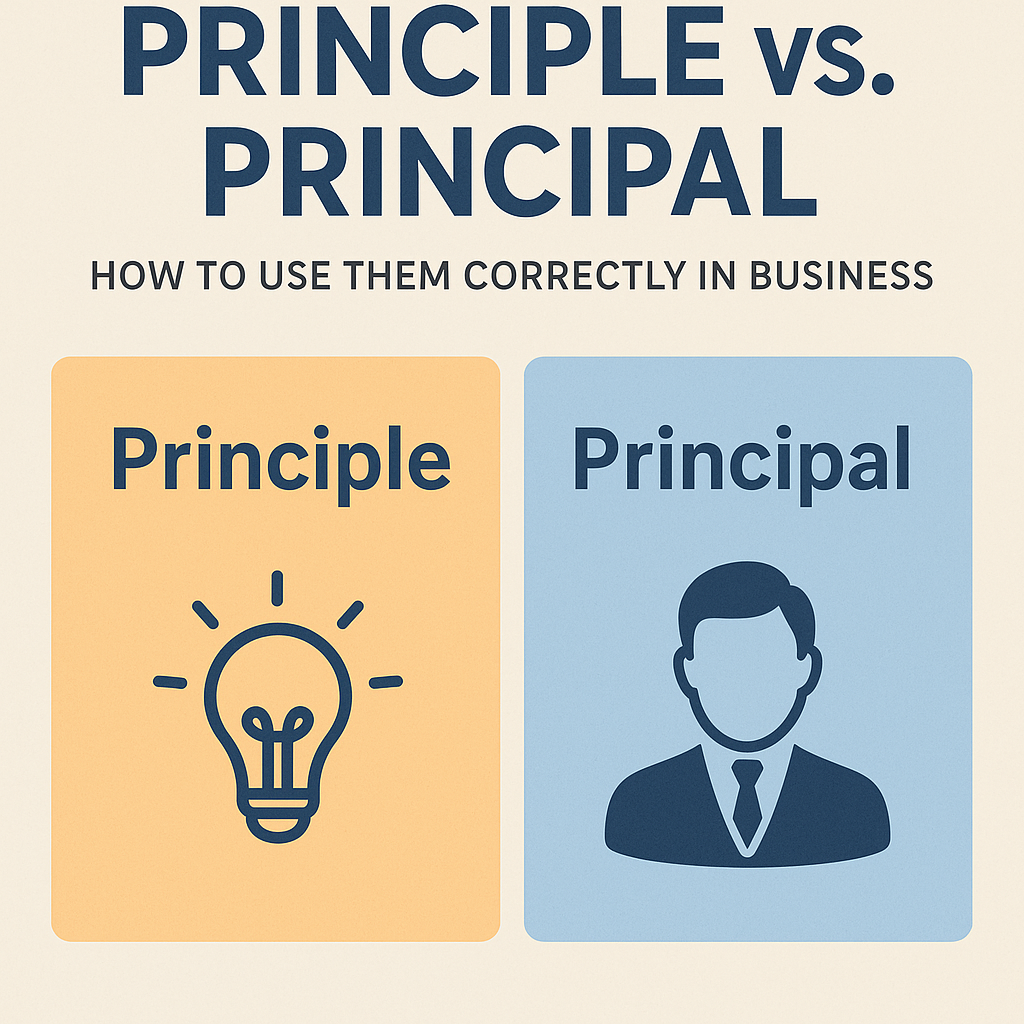
Principle vs. Principal: How to Use Them Correctly in Business
Understanding words can be tricky. Some words seem similar, yet mean different things. This is true for “principle” and “principal.” In business, using the right word matters. It affects communication. It shapes perception. Let’s dive into the names and meanings of these words.
What Is a Principle?
A principle is a rule or belief. It guides actions or decisions. In business, principles determine company values. For instance, honesty is a principle in many firms. They believe in truthfulness. Thus, they act based on this belief.
Businesses may have principles like:
- Integrity
- Transparency
- Fairness
These principles set a foundation. They influence company culture. For further reading about business principles, check this article.
What Is a Principal?
A principal, on the other hand, has different meanings. In business, a principal usually refers to a person. This person has authority. They often manage or own a business. In a financial context, principal refers to the amount of money involved. For instance, if you take a loan, the principal is the initial amount borrowed.
Other usages of principal include:
- School principal
- A main actor
Why Clarity Matters in Business
Using “principle” and “principal” correctly matters. Miscommunication can lead to confusion. This may affect relationships. It can alter negotiations. For instance, saying “The principal of our company believes in transparency” changes the meaning from a belief to a person.
Examples of Usage
Consider these examples:
- “The company follows the principle of customer satisfaction.” (belief)
- “The principal will attend the meeting.” (person)
In the first example, clarity shows a guiding belief. In the second, it indicates who will attend. Misusing these terms can mislead. Always double-check. This keeps communication clear.
Common Mistakes
Many people mix up these words. This mix-up often occurs in emails or reports. For example:
- “Our team’s principal belief is innovation.” (Incorrect)
- “Our team’s principle belief is innovation.” (Correct)
Such mistakes can seem minor. However, they reflect poorly. They reduce credibility. Business communication should be precise. Thus, always verify usage.
Tips for Correct Usage
To avoid mistakes, try these tips:
- Remember: principle is about beliefs and rules.
- Principal relates to people or main amounts.
- When uncertain, substitute the words. Use “rule” for principle or “person” for principal.
Practice Makes Perfect
One way to improve is practice. Create sentences. Use both words. Review them. Consider contexts. This active engagement reinforces learning.
You may also consult business communication tips for more insights.
Conclusion
In summary, know the difference between principle and principal. Use principle for beliefs and rules. Use principal for people or main amounts. Correct use plays a vital role in business communication. Thus, take the time to check your writing. This will enhance clarity and understanding. In turn, it builds credibility.
Now is the time to apply this knowledge. Practice using these words correctly. It leads to better communication. It fosters stronger relationships. In conclusion, make principle and principal part of your business vocabulary.
For more insights, visit Editmojo.
#Principle #principal #correctly #business