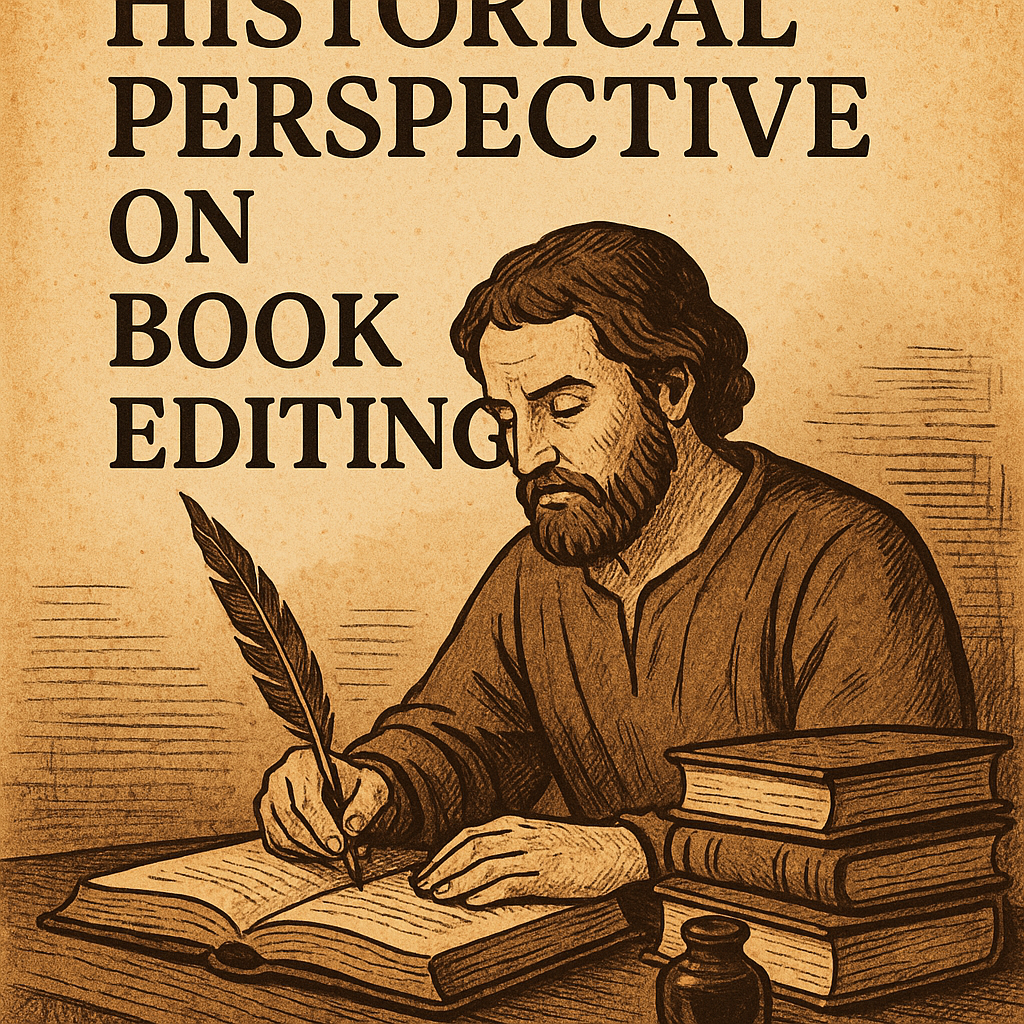
Historical Perspective On Book Editing
Editing is an old practice. It dates back to ancient civilizations. In those times, writing was sacred. Scribes edited texts for clarity. This laid the foundation for modern editing.
Early Beginnings
The origin of editing can be traced to ancient Egypt. Here, scribes meticulously copied texts. They ensured accuracy. Similarly, ancient Greece had editors. They checked works of philosophers. These early editors had a clear goal: maintain integrity.
Roman Influence
As history progressed, Roman culture emerged. Editing took on new dimensions. Scholars, such as Cicero, revised works extensively. They improved structure and readability. Consequently, literary quality enhanced significantly.
Middle Ages to the Renaissance
The Middle Ages saw a shift. Manuscripts dominated the scene. Monks dedicated themselves to copying texts. Indeed, this process required a great deal of editing. The focus remained on preserving works.
However, the Renaissance brought change. Print became more prominent. With this, the role of editors evolved. They started to shape narratives actively. Furthermore, the invention of the printing press created a demand for faster editing. This time marked a new era.
Impact of the Printing Press
The printing press revolutionized literature. It allowed wider distribution. More books meant more errors. Thus, editors became crucial. Their role expanded from merely checking text to refining it. They now shaped the dialogue and ideas within books.
18th and 19th Centuries
By the 18th century, editing became formalized. Publishers needed standards. Consequently, editorial guidelines emerged. This period also saw the rise of personal editors. Authors relied on them for feedback. This collaboration enhanced the quality of works significantly.
Literary Movements
The 19th century brought literary movements. Romantics and realists had distinct styles. Editors adjusted texts accordingly. They adapted works to fit trends. This interaction between editor and author shaped literature. It was no longer just about correction. It became a partnership.
20th Century Changes
The 20th century witnessed rapid transformation. New technologies changed the game. Typewriters and computers made editing easier. Moreover, editors had to focus on content and structure. The challenge became balancing the author’s voice with market expectations.
Cultural Shifts
Cultural movements, such as Modernism, influenced editing. Editors needed to embrace new ideas. They had to discard traditional rules. Consequently, creativity flourished. This era marked a significant shift in editing philosophy.
Digital Era
With the dawn of the digital age, editing faced new challenges. Online publishing exploded. Editors had to adapt. They now work in fast-paced environments. Quick turnarounds became standard. The need for a clear and concise style increased.
Editing Tools
Technology introduced editing tools. Software programs aided in grammar and punctuation. However, these tools are not a substitute for human insight. Editors still play a critical role. They maintain the essence of the work.
Contemporary Perspectives
Today, editing remains vital. The landscape has changed, yet the goals are similar. Editors focus on clarity, structure, and storytelling. They ensure the author’s voice shines through. Moreover, collaboration continues to be crucial.
Future Trends
Looking ahead, artificial intelligence may impact editing. AI can assist with basic tasks. However, the human touch will remain irreplaceable. Readers value nuance and emotional depth. Thus, editors will still have a vital role to play.
Conclusion
In conclusion, book editing has a rich history. From ancient scribes to modern digital editors, the journey is remarkable. Each era contributed to the evolution of the craft. Today’s editors stand on the shoulders of giants. Their role is crucial in shaping literature. As technology evolves, so too will the practice. Meanwhile, the essence of editing will endure.
For further exploration of editing practices and insights, visit EditMojo.
This structured article reflects the historical perspective on book editing. Its simplicity and clear progression make it easy to follow while maintaining depth through transitions and relevant content.