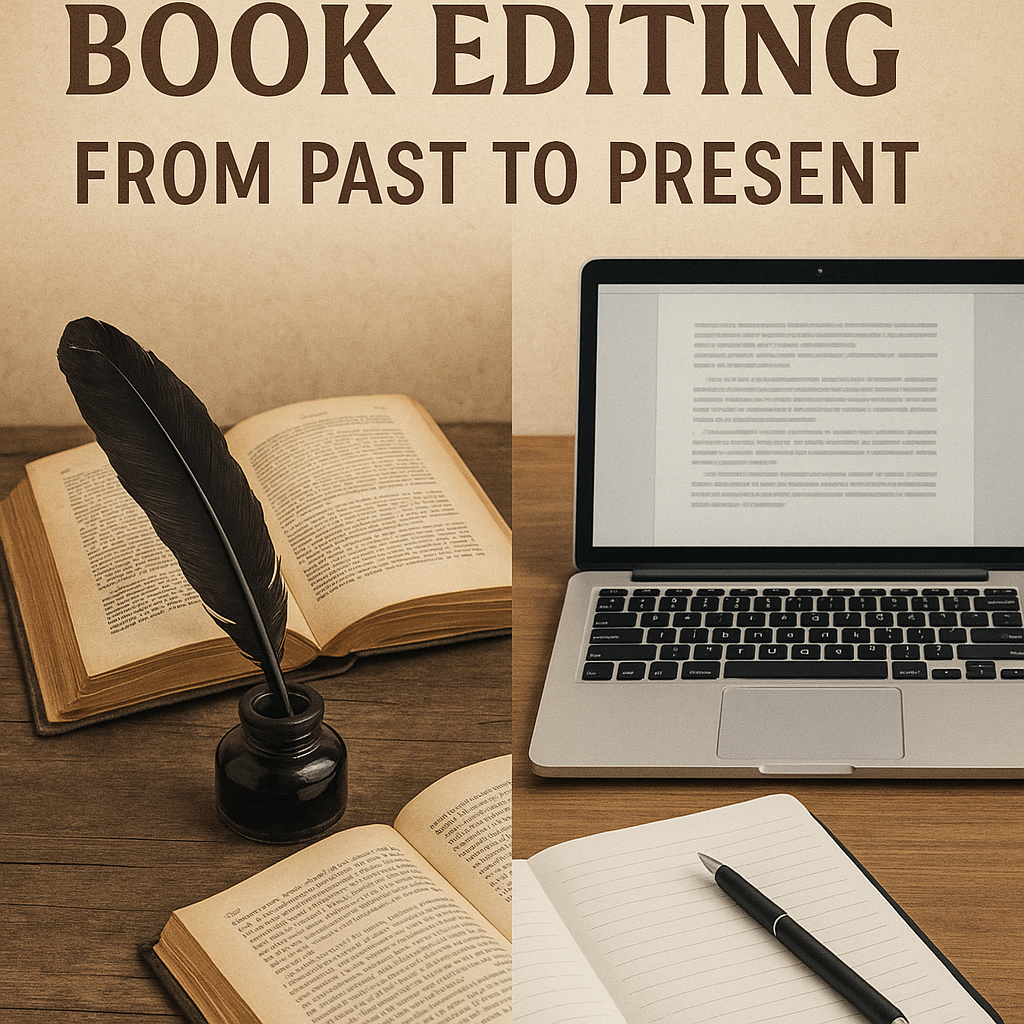
Book Editing: From Past to Present
Book editing, in many ways, shapes literature. It has evolved significantly over time. In this article, we explore its journey from past methods to present practices.
The Early Days of Book Editing
Initially, editing meant simple corrections. Manuscripts often needed fixing. Scribes wrote by hand, and errors were common. These early editors focused on clarity. They corrected spelling and grammar mistakes.
Moreover, critical thinking played a role. Editors assessed content for structure. They ensured smooth flow. In this time, the editor was often the author’s peer. Feedback came from within circles of writers.
The Printing Revolution
The arrival of the printing press changed everything. During the 15th century, books became more accessible. Consequently, the demand for editing grew. Editors had to ensure quality across larger volumes.
With this shift, editors faced new challenges. They balanced creativity with accuracy. Copy editors emerged, focusing on detailed corrections. They worked closely with typesetters.
Development of Editing Roles
As the publishing industry expanded, roles diversified. First, developmental editors came into play. They focused on content and helped shape narratives. Later, copy editors took on the task of precision. They polished manuscripts until they shined.
Furthermore, technical editors appeared as genres expanded. They specialized in specific areas. Science, technology, and others required unique knowledge. Thus, editing became more intricate.
The Digital Era
The rise of the internet changed editing again. In the late 20th century, self-publishing emerged. Authors gained new freedoms. However, this led to varying quality. Editing became crucial once more.
Online editing tools made their debut. Authors could now use platforms to check grammar or style. Some popular tools include Grammarly and ProWritingAid. These tools provided quick fixes but lacked human insight.
Impact of Technology
Technology transformed communication. Editors now collaborated from different regions. Cloud-based platforms like Google Docs allowed real-time edits. This increased efficiency.
Consequently, the editing process sped up. Editors could work faster, but quality remained crucial. The challenge was to blend technology with creativity. Missteps in reliance on tools became common.
Current Trends in Book Editing
Today, editing is more than corrections. It involves deeper analysis. Editors now focus on themes, structure, and audience engagement. This shift demands a broad skill set.
Moreover, genre-specific knowledge is essential. Each genre has unique conventions. An editor must understand these to serve the author well. Non-fiction requires fact-checking. Fiction demands character consistency.
Self-Publishing and Editing
Self-publishing continues to rise. Authors often bypass traditional routes. Yet, this path can be perilous. The lack of professional editing can harm books.
Professional editors offer services tailored to indie authors. They help refine manuscripts before publication. For insights on services, visit EditMojo.
Editing for Different Formats
Editing today spans various formats. E-books, print, and audiobooks all require unique approaches. Each format presents challenges.
For instance, e-books may need additional formatting checks. Audiobooks require attention to audio flow. This diversification complicates the editing process.
Collaboration in the Editing Process
Collaboration is vital now. Editors work with authors, agents, and publishers. Feedback loops enhance the final product. Authors provide insights on their vision. Editors refine that vision with their expertise.
In this collaborative environment, mutual respect is crucial. Each party brings strengths to the table. This teamwork can lead to outstanding literary works.
Future of Book Editing
Looking ahead, editing will likely continue evolving. Artificial intelligence may play a larger role. AI can assist with routine tasks, allowing editors to focus on deeper elements.
However, the human touch remains irreplaceable. No algorithm can replicate intuition and understanding. An editor’s instinct is crucial for crafting compelling narratives.
Resources for Aspiring Editors
For those interested in editing, various resources exist. Books, online courses, and workshops can provide foundations. Networking within writing communities can also yield valuable insights.
Visit EditMojo for articles and resources. These can guide you in your editing journey.
Conclusion
Ultimately, book editing has come a long way. From simple corrections to comprehensive evaluations, it shapes literature. The interplay of technology and creativity is vital. As editing continues to evolve, its core remains intact: improving narratives.
Authors and editors together create compelling stories. Their collaboration helps literature flourish. The future holds promise, blending tradition with innovation.
As we embrace change, one thing is clear: editing will always matter.