Examples of When to Use Active and Passive Voice
Understanding voice is key in writing. Active voice focuses on the subject. Passive voice shifts focus to the object. Each has its purpose. Use this guide to know when to use which.
What is Active Voice?
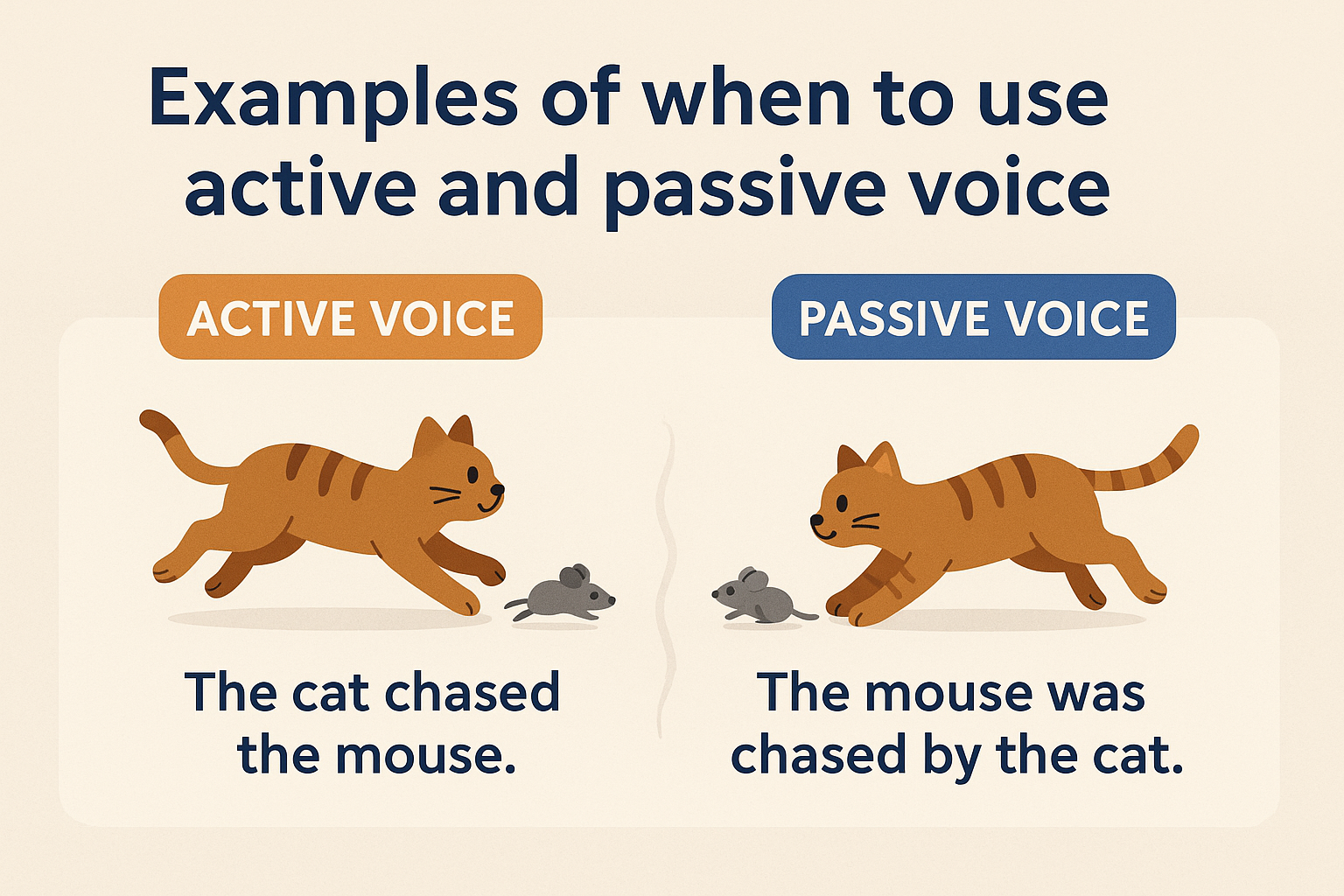
In active voice, the subject performs the action. This makes sentences clear and direct. For example: “The cat chased the mouse.” Here, “the cat” is the doer. It grabs attention quickly.
Active voice is often preferred. It energizes writing. It adds clarity to your message. When telling stories or describing actions, use active voice.
What is Passive Voice?
In passive voice, the object receives the action. The subject either comes after or is omitted. For example: “The mouse was chased by the cat.” The focus shifts. It highlights the action over the doer.
Passive voice can be useful. It adds variety. It can create a sense of mystery. It can also soften statements. For instance, “Mistakes were made” avoids blame.
When to Use Active Voice
Active voice works well in most cases. Here are some examples:
1. To Enhance Clarity
Use active voice for straightforward ideas. For example: “The manager approved the budget.” This is clear.
2. To Engage Readers
Active voice keeps readers interested. For instance: “The chef cooked the meal.” It shows action and keeps the momentum.
3. In Instructions
Use active voice in guides. For example: “Add salt to the soup.” This tells the reader what to do directly.
4. To Convey Strong Emotions
Active voice displays feelings better. For example: “She won the race.” This creates excitement.
When to Use Passive Voice
Passive voice can also be effective. Here are situations to consider:
1. To Emphasize the Action
Sometimes, the action matters more than the doer. For example: “The novel was published in 2022.” Here, the publication is the focus.
2. To Avoid Blame
Passive voice can soften statements. For example: “Errors were found.” It avoids pointing fingers.
3. When the Doer is Unknown
If the doer is unclear, use passive voice. For instance: “The door was left open.” It doesn’t matter who left it open.
4. In Scientific Writing
Use passive voice for objectivity. For example: “The solution was heated to 100°C.” This keeps focus on the experiment, not the researcher.
Examples of Active vs. Passive Voice
Let’s look at some examples side-by-side:
1. Active: “The teacher explained the topic.”
Passive: “The topic was explained by the teacher.”
2. Active: “The athlete set a new record.”
Passive: “A new record was set by the athlete.”
3. Active: “They completed the project.”
Passive: “The project was completed by them.”
Mixing Active and Passive Voice
You might mix voices in a single piece. Consider your audience and intent. For example, use active voice initially. Then switch to passive for variety or emphasis. Do so carefully. Too much passive can confuse readers.
How to Choose Between Active and Passive Voice
Choosing depends on your goals. Ask yourself:
1. What is my focus?
If the doer is key, use active voice. If the action matters more, go passive.
2. Who is my audience?
Consider what they prefer. General audiences like active voice. Academic audiences may accept passive.
3. What is my purpose?
Clear communication is crucial. Use active for instructions and stories. Use passive for formal reports or when details about the doer are unimportant.
External Resources
For more on voice in writing, check out Grammarly for insights.
You can also explore EditMojo for tips on editing and refining your voice.
Internal Links for Further Reading
Make sure to check out these articles on voice:
Practice Exercises
Practice is vital for mastering voice. Here are a few exercises:
1. Convert Passive to Active
Change: “The bridge was built by workers.” to active voice.
2. Use Passive Effectively
Write a sentence using passive voice where the doer is less important.
3. Mix Voices
Create a short paragraph. Use both active and passive voice. Aim for balance.
Final Thoughts
Understanding active and passive voice improves writing. Each has its role. Use active voice for clarity and directness. Shift to passive for variety or specific emphasis. Always consider your audience.
By practicing, you will find a balance. Refer back to this guide when needed. With time, your writing will enhance. Happy writing!
This HTML formatted article provides an overview of active and passive voice, examples, and advice, maintaining your request for simplicity and clarity in wording.
#Examples #active #passive #voice